
Taking science AND faith seriously.
Episodes
Monday May 13, 2019
Monday May 13, 2019
We welcome Stephen Barr back to the show. We are humbled and delighted to be your podcast hosts for the Society of Catholic Scientists Conference 2019 and hopefully beyond. In that context, today we interview Dr. Barr about his experience as a writer and speaker on the relationship between Catholic faith and science that led up to an eventful conversation between himself and Jonathan Lunine. He discusses the formation of the Society of Catholic Scientists in 2016 and the conferences they immediately began holding in 2017. Credit should be given to First Things for giving him a platform to become known to the wider community, and the Lumen Christi Institute for being instrumental in putting together the logistics for the first SCS conference in Chicago.
If you are a Catholic scientist, whether a student or a graduate, there is still time to register for the Society and the conference coming up June 7-9 at Notre Dame. The deadline for registration is May 15.
Monday May 06, 2019
Monday May 06, 2019
This ended up being an emergency episode Paul recorded solo, since Zencastr ate all but a few minutes at the beginning of each recording. There seem to be serious problems with Zencastr since Paul’s MacBook died and he had to resurrect his Windows laptop.
The Big Bang; cosmology seems to require a beginning, uncaused cause
Problems of mind; intellect / qualia, possibility of free will.
There is no materialist explanation of human intellect, only assertions of dogma and crude shufflings of the feet.
Ongoing occurrence of miracles, Lourdes medical board, Fatima, Shroud of Turin; Bob Schuchts
There are far too many miracles and supernatural phenomena that defy materialist explanation: Eucharistic miracles, healings at Lourdes and elsewhere, Fatima, demonic possession…
The testimony of the first Christian disciples requires absolutely crazy explanations that themselves defy our best science even if we reject the idea that Jesus rose from the dead.
The continuing existence and expansion of the Church in the face of persecution is likewise historically unparalleled, save only for the continued existence of Judaism.
Second of all, it provides perspective and healing for human problems that nothing else does.
John Warner Wallace from Breakpoint podcast; LAPD homicide officer
What has God done in my life... we GET to that, we don't start there like Mormons
Christianity provides a shockingly direct answer to the question of evil: the transcendent, all-good God is Himself willing to experience it.
The Christian faith continues to spread in Africa and Asia in the face of continued persecution, whether of the violent or of the brainwashing variety. Why is that?
The attempts of Western society to escape Christianity have made us amazingly miserable amid all our material possessions and security. Why do we so halfheartedly turn away from these distractions?
The most characteristic failing of our age, I would argue, is addiction, and addiction has evoked a powerful response in the form of the Twelve Steps. Although these Steps are deliberately offered to everyone with no attempt made to proselytize them to any specific religion—indeed many recovering addicts refuse to identify themselves as religious—nevertheless, the principles of the Steps are completely and suspiciously consistent with Catholic Christianity.
The Catholic intellectual tradition has a tremendously formidable intellectual structure, the most robust philosophical realism, an enormous storehouse of moral philosophy and psychological insight, and a wealth of stories of human drama in the lives of both saints and sinners.
Why do we slave along as intellectual second or third-class citizens in the modern world? I was just looking at the want ads of literary agents and realized that they are all blithely “progressive” members of the stumbling, bumbling cultural vanguard. Our culture is shaped by stories forged out of this nihilistic experience of forgetting an entire civilization’s worth of wisdom.
We are looking to help out at the Society of Catholic Scientists Conference this year, and are in talks about how we can do that. We’re really excited about working to create a greater sense of community among Catholic scientists!
Monday Apr 29, 2019
Monday Apr 29, 2019
Apologies for the sound quality today; Zencastr wasn’t working, so we recorded on Zoom, and even then there were problems with the audio especially in the latter half of the podcast.
The question we take up at the beginning of the Easter season is this: Why has Western society gone to such pains to throw away the best thing going, intellectually and otherwise?
In his ongoing podcast research, Paul has come across the Pat Flynn Show, and listened to some really good interviews with Fr. Robert Spitzer (a TSSM interviewee) and Ed Feser (whose talk at the 2018 Society of Catholic Scientists conference was the topic of one of our most popular episodes). Bob Spitzer’s interviews in particular were some of the most inspiring things I’ve encountered recently and really led me to propose this series of conversations with Bill about how Catholic Christianity is the best way of looking at the world.
Of course, Western society has drifted hard away from its roots in classical Greek and Jewish/Christian heritage. Ireland is the most recent example of a society, one of the last to retain a semi-traditional cozy relationship between the Church and the state, now deciding to punish the Church for the crimes of the hypocritical members of its clergy by trying to erase its very history. Progressivism in general replaces traditional dogmas with dogmas-of-the-day, and the record up to this point has been pretty dismal.
We spend some time discussing the roots of what the contemporary West seems to consider its greatest achievement, modern science, in the critical tradition of Scholasticism (knowledge of which was practically the first thing to go after the Reformation began the process of intellectually punishing the Church). We would do better to have a broader memory of the Scholastic tradition even among us Catholics...to recall that it was a movement in which Thomas Aquinas was embedded, rather than remembering only him. In our time as well we don’t need single hero figures, we need a community. The scientific community knows this very well.
We go on to consider what this fraught term “dogma” really means. The Christian dogmas are really testimony, and they can’t change without repudiating the unrepeatable testimony of the events of salvation history. This is the context of the warnings at the end of the Apocalypse of John, “cursed be he who adds or takes away from the words of this book.” As Chesterton and many others have pointed out, these dogmas are not a straightjacket but a foundation and structural members that allow us to build both intellectual structures and actual human lives that don’t sink into the morass of changing human inventions. Admittedly there are many Christians, Catholics included, who seem to take comfort in the false idea that the Bible, or Tradition, provides us all the answers we could possibly want to know and there is no need or use in further growth. That is not the teaching of Jesus when he commented that the Spirit would [future] lead us to all truth.
The high Middle Ages confronted the question of harmonizing Aristotle with Jesus Christ. This was both a creative and a logical process that led to great works of criticism and synthesis… excellent practice for the scientific process as we now know it.
A reminder that the Society of Catholic Scientists Conference is approaching June 7-9. Registration is open through May 15.
Monday Apr 22, 2019
Monday Apr 22, 2019
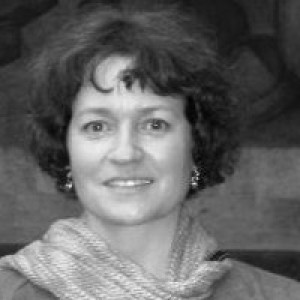
Today we present the second half of the interview with Darcia Narvaez, social scientist at Notre Dame and a specialist in childhood inculturation, attachment, and bonding issues.
We start out this half of the interview with a discussion of what Karl Polyani called the "great transformation" of European society, involving the breakdown of the pre-modern order and its safeguards for a stable population by means of understandings about community use of land, perhaps resulting in the popularity of emigration to the New World by dispirited, dispossessed, and to some extent dangerous people.
Several times Darcia disparages "hierarchy," understood in its general sense of social stratification, which she or other who have influenced her theorize to have caused huge social catastrophes, including the corruption of the Christian Church by its integration into the late Roman state and the collapse of populations and cultures in the New World on contact with the colonizers from Europe. Late in the podcast I ask her explicitly whether there is any benefit to civilization... let us know in the comments on Facebook or Podbean what you think about the answer!
Darcia's claim is that humans are by nature more egalitarian than other animals. This goes right down to childrearing, where human children, born so completely needy, have an innate expectation that their requests for assistance will be met. She comments that there is a Native American word, "wetiko," that was used to describe an attitude thought of as akin to a sickness that characterized those who acted in an aggressive and exploitative way toward others. Whether or not premodern peoples were all more free of this, it's certainly a common feature of civilized peoples. The Old and New Testaments certainly testify to this, and the need to confront it with compassion and an egalitarian attitude. We discussed the specific example of the disease of the large organization, society, business, or government, in which those at the top are simply disconnected, both intellectually and morally, from those at the bottom.
We mentioned subsidiarity, and might have mentioned clericalism... the social science of these concepts will hopefully be fodder for future podcasts.
Monday Apr 15, 2019
Monday Apr 15, 2019
Find Darcia's writings and resources across the internet:
Resource Page at Psychology Today
Topics we discussed in this podcast:
The human need for socialization from the very beginning, and ways that goes awry in contemporary society.
Things we can do to learn some of these lessons later in life:
- Self-calming via breathing, meditation, prayer. (Does our contemporary culture of outrage stem from a lack of the ability to calm ourselves that we are meant to learn starting in infancy?)
- Build a social network. We were meant to have interaction with an extended family that spans all age ranges for proper socialization. It's not too late to play with children, talk to the elderly, interact with people at other stages of life.
- Learn new languages and interact with people in different cultures. What are their reasons for doing the things that they do?
- Spend time with nature.
- Practice going outside yourself, defusing rigid thinking and attachment to "it has to be done this way." Intelligence is a measure of flexibility as much as anything.
Bill asked about social media and our tendency to seek out those who already agree with us. Darcia noted that we need guidance on how to socialize. Up through age 30 or so, it's natural for human beings to get that kind of guidance from others. Unfortunately we get that guidance through TV and video games now.
As usual, this was the first half of our interview. More discussion and more questions than we could possibly answer next time!
Monday Apr 08, 2019
Monday Apr 08, 2019
In this episode we roll out a new format for Season 2.
We recap Season 1 (April 2018 - March 2019) and the three focus areas of the podcast so far:
- Discussion of the fundamentals of the question whether it's reasonable to believe in both science and the Catholic Christian faith, and some exploration of particular topics, like the role of geology in the interpretation of the book of Genesis.
- Review and comments on the speakers at the Society of Catholic Scientists Conference 2018.
- Interviews with scientists and scholars living out their Christian faith, many of whom are actively trying to spread the truth that the presumed conflict between science and religion is false, born from shoddy understandings, strawman arguments, and reactions against hypocrisy. Three of these people (Patricia Bellm, Chris Baglow, and Jay Martin) do this work at the McGrath Institute for Church Life at the University of Notre Dame.
We then go on to discuss our plans for coming episodes, turning to topics of religion, spirituality, and psychology (including topics like child development and addiction) where the intersection of faith and science allows us to build new solutions or give tremendous new life to old solutions to the problems of human life.
Sunday Mar 31, 2019
Sunday Mar 31, 2019
0:00 - The question of relativism vs. hyperrationalism
1:00 - God's love is not a "fact" but, say, hominid ancestry is
1:30 - Tapping into the belief in the rationality of science to bring back belief in reality in faith
2:30 - "Kicking in the back door of relativism"
4:00 - Linkages between theology, philosophy, and science: e.g. logical consistency
5:30 - Effects on the rest of schools that participate in the Science & Religion Initiative
6:30 - Encouragment to integrate, say, history, economics with faith as well
7:00 - Congregation for Sacred Doctrine 1977 "The Catholic School"
8:00 - Faith & literature, arts
9:30 - The true limits of dogma; need to understand how limited Catholic dogma really is, and how non-restrictive
13:00 - Teachers woefully overworked and underpaid, not given the ability to succeed
14:30 - Blessed to have excellent but also humble panelists & experts intending to listen to one another
19:00 - Story of the second & first editions of Baglow's textbook

Thursday Mar 28, 2019
Thursday Mar 28, 2019
Compartmentalization by students at Notre Dame
Bill: ethics as a checklist
The Science & Religion Initiative (see Baglow & Martin interview)
The need to get the same message in the biology class and in theology class
The change in the teachers after a few days in the workshop: divisions fade out
It's a challenge having an "athletics" teacher in the program (phys ed)...
Yet there are things: doping and respect of the body
Patricia believes "you become what you eat" applies to violent video games as well
Feed yourself and your children good things instead

Monday Mar 25, 2019
Monday Mar 25, 2019
0:30 - McGrath Institute for Church Life: Science & Religion Initiative outreach to high school teachers to integrate science & faith
2:00 - Gulf Coast Faith Formation Conference (a good time to be away from Notre Dame)
3:00 - Summer seminars: Foundations Notre Dame, Foundations New Orleans, Capstone
4:00 - Foundations ND: lecture based, top scholars in specific disciplines, with workshops
6:00 - Foundations NO: experimental work and discussions
7:00 - Dialogue between science & theology teachers about their own specialties
8:00 - Capstone: topic-based theme & lecturers; special track for administrators; teaching practices
11:00 - Templeton Foundation study showing schools already trying to do this on their own
12:00 - The need to do this well and not engage in pseudoscience or gloss over tough questions
14:00 - ICL team making "housecalls" to individual schools
14:30 - Baglow textbook on science & faith
18:00 - Vast multiplication of interest from schools just since 2011
19:00 - Real motivations for believing faith is inconsistent with science: the need for hope [and, not made explicit, the appropriateness of hope]
20:00 - "I thought I was the only one"
21:00 - The historical and emotional impulse: rebellion against Christian hypocrisy
22:30 - Baglow makes the Fulton Sheen point: "I also hope THAT God doesn't exist!"
23:00 - The questions he wishes people would ask about God, meaning, science, etc.
24:00 - "What do you mean by 'God creates everything'"
25:00 - The nature of the discourse we encourage
26:30 - "I don't know"
27:00 - "When did science and religion enter into conflict?" - because they have not always been
28:20 - The true role of the university in integrating human wisdom
30:30 - Newman on evolution in the context of Development of Christian Doctrine
Thursday Mar 21, 2019
Thursday Mar 21, 2019
The Bible as an instrument of getting to tell people what to do
Flood geology and cramming one's ideas into a "literal" reading
Adam and the Genome